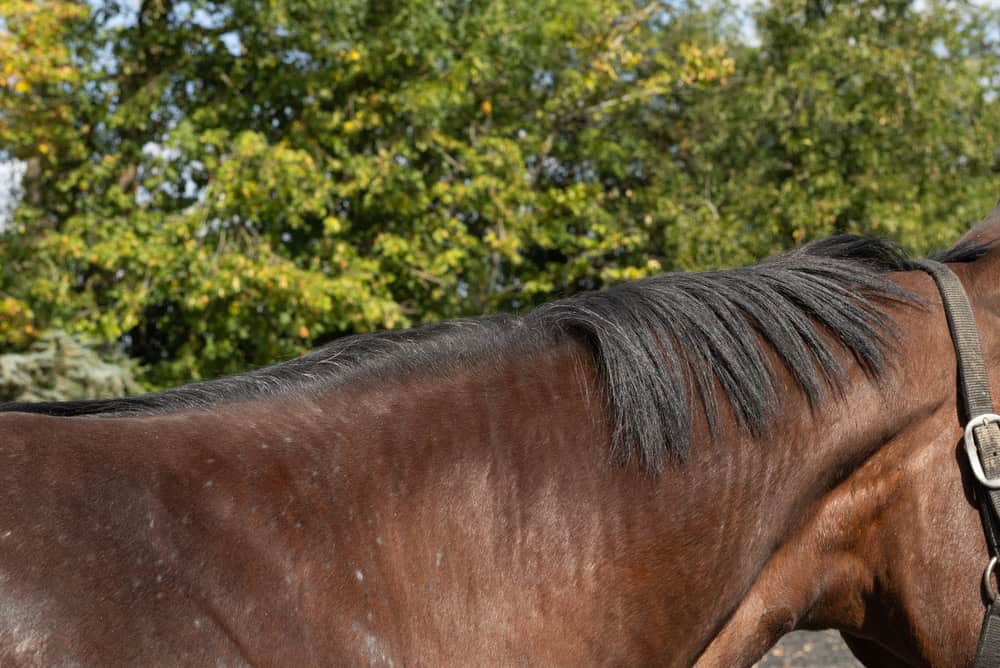
6 Common Horse Skin Conditions Every Owner Should Know Quick answer: Common equine skin conditions include rain rot, ringworm, sweet itch, pastern dermatitis, warts, and sarcoids. These horse skin conditions...
Read More
Why Your Horse Curls Its Lip (And What It Means) Quick answer: When a horse curls its upper lip, it is displaying the Flehmen response, a natural behavior used to...
Read More
Stressed Horse or Misbehaving Horse? Here's How to Tell Quick answer: A stressed horse shows involuntary physical signs like sweating, a fast heart rate, and flared nostrils. A misbehaving horse...
Read More
Quick answer: Horses sleep standing up as a survival mechanism, using a system of tendons and ligaments called the stay apparatus to lock their leg joints with minimal effort. However,...
Read More
Ponies vs Horses: What's the Difference? Quick answer: The primary difference between ponies and horses is height. At maturity, ponies measure under 14.2 hands (58 inches or 148 cm), while...
Read More
How to Prevent Tie-Up and Muscle Soreness in Working Horses Quick answer: Supporting a working horse's muscle health comes down to three pillars: consistent exercise management, low-starch and high-fat nutrition,...
Read More