April 7, 2026
The Importance of Proper Leg Care for Your Horse’s Mobility
A horse’s legs carry incredible weight and generate massive power, yet they are surprisingly fragile. The lower leg consists mostly of bone, tendon, and ligament, with very little muscle tissue to absorb shock. This unique anatomical structure makes horses especially vulnerable to injury, inflammation, and degenerative issues.
Maintaining excellent horse mobility requires a dedicated and consistent approach. Without healthy legs, a horse simply cannot perform, whether they are a high-level competitor or a trusted trail companion. A proactive routine is the best defense against career-ending injuries.
Proper leg care extends a horse’s working life, reduces daily fatigue, and improves overall circulation. By establishing a solid daily routine, horse owners can identify minor issues before they become permanent problems.
Daily Inspection for Early Detection
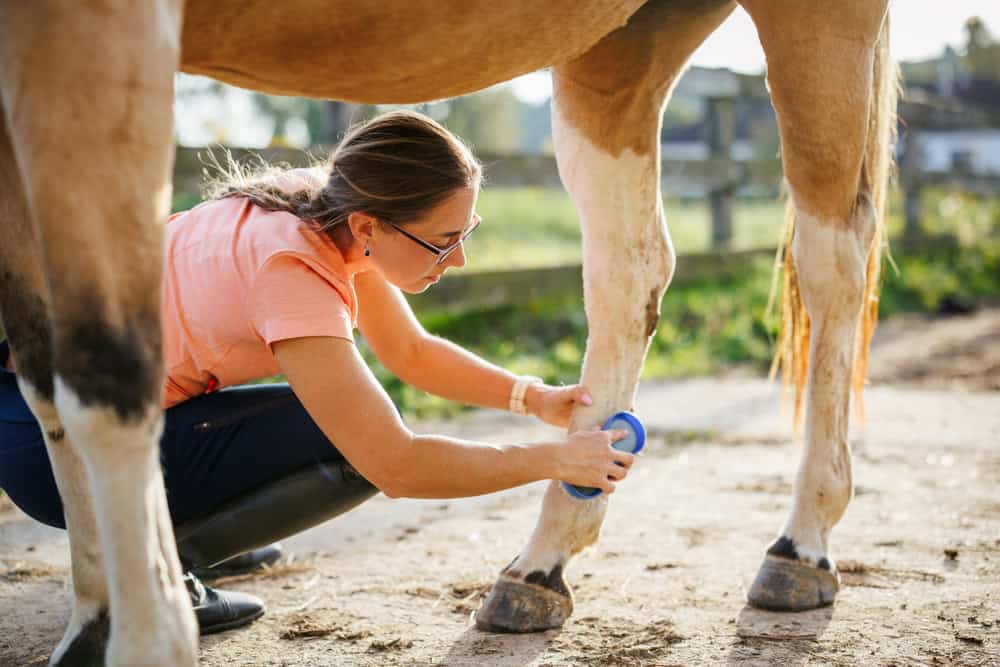
The first step in proper leg care is a daily, hands-on inspection. Running your hands down your horse’s legs every single day helps you establish a baseline for what is normal.
Pay close attention to the cannon bone and the fetlock joint. You are feeling for any unusual heat, unexpected swelling, or structural changes. A sudden warm spot or a slightly tender ligament can be the first warning sign of an impending tendon strain. Catching these subtle changes early allows you to adjust your horse’s workload and prevent permanent lameness.
Protecting Legs During Work
When a horse is in motion, the risk of impact injuries increases significantly. Overreaching, where the hind hoof strikes the front leg, or interference, where opposite legs strike each other, can cause severe trauma to unprotected tissue.
Using the right protective gear is a simple way to safeguard horse mobility.
- Splint boots protect the inside of the cannon bone from interference.
- Tendon boots shield the vulnerable flexor tendons at the back of the front legs from strikes by the hind hooves.
- Bell boots cover the coronary band and the bulbs of the heel, preventing overreaching injuries and pulled tendons.
Post-Exercise Recovery Techniques
A hard workout puts significant stress on a horse’s limbs. Post-ride recovery is a critical component of proper leg care. After intense exercise, the goal is to reduce inflammation, minimize soreness, and prevent the legs from swelling, often referred to as “stocking up.”
Cold hosing is a traditional and highly effective method for pulling heat out of the lower limbs. Running cold water over the legs for 10 to 15 minutes constricts blood vessels and flushes out metabolic waste.
For more targeted therapy, ice boots provide consistent, surrounding cold therapy that penetrates deep into the tendons and ligaments. Applying liniments can also help soothe tired muscles and joints, though they should be used according to the manufacturer’s directions.
Stall Support and Circulation
Horses are designed to move constantly. When they are confined to a stall, their natural circulation slows down, which can lead to fluid pooling in the lower legs. Providing support during periods of inactivity is an important aspect of proper leg care.
Standing wraps and specially designed bandages offer gentle compression. This helps maintain steady circulation and prevents the legs from swelling. Wraps also protect the tendons from accidental bumps or scrapes in the stall.
It is crucial, however, to learn the correct wrapping technique. A bandage applied too tightly or unevenly can cause severe tendon damage, known as a “bowed tendon.”
The Hoof Foundation
There is a common saying in the equestrian world: “No hoof, no horse.” The hoof is the foundational structure of the entire leg. If the hoof is unbalanced, the joints, tendons, and ligaments further up the leg must compensate, leading to uneven wear and tear.
Regular farrier care is absolutely crucial. A skilled farrier will trim and shoe the horse to maintain correct alignment and angles. This proper balance prevents unnatural stress on the joints and soft tissues. Coordinating your leg care routine with consistent hoof maintenance ensures the entire limb functions exactly as nature intended.
Long-Term Consequences of Neglect
Failing to prioritize leg health can have devastating long-term effects on horse mobility. Repeated, unmanaged stress leads to micro-traumas in the tissues. Over time, these micro-traumas accumulate, resulting in chronic conditions like arthritis or severe tendonitis.
These degenerative issues cause a permanent loss of flexibility, persistent pain, and a significant drop in performance. By the time a horse shows obvious lameness from arthritis, the damage is often irreversible. Proactive care keeps the limbs, joints, and tendons functioning smoothly, ensuring the horse stays comfortable well into their senior years.
Innovation in Equine Healing
As our understanding of equine physiology grows, so do the technologies available to support healing and recovery. Modern horse owners now have access to advanced tools that go far beyond traditional wraps and liniments.
Gladiator Equine is at the forefront of this innovation. Our advanced equine healing devices utilize far infrared technology to safely elevate tissue temperature, dramatically increase blood flow, and accelerate the body’s natural recovery processes. Whether you are managing an acute injury or supporting a horse through a strenuous show season, far infrared therapy offers a non-invasive, highly effective solution.
If you want to take your horse’s recovery to the next level, explore the full range of Gladiator Equine far infrared devices today.