
July 6, 2026
How to Warm Up High-Performance Horses in Summer Heat
Quick answer: In hot weather, keep warmups for high-performance horses to 15–20 minutes, broken into short blocks with walk breaks and cool water rinses. Pre-cool your horse, train during cooler hours, hose continuously after work, and replenish electrolytes to prevent heat stress and protect performance.
Hot summer days raise the stakes for every rider. High-performance horses generate a huge amount of internal heat when they work, and rising temperatures make it harder for their bodies to cool down. Push too hard, and you risk fatigue, poor recovery, or even heat stress.
The good news? A smarter warmup makes all the difference. With a few strategic adjustments, you can keep your horse safe, comfortable, and ready to perform — even when the mercury climbs. Below, Gladiator Equine breaks down practical summer heat exercises and routines to help your horse thrive.
Why Does a Strategic Warmup Matter in the Heat?
Heat causes a horse’s muscles to warm and tire faster than usual. A long, continuous warmup that works fine in spring can quickly overheat a horse in July. The aim shifts from building stamina to preparing muscles efficiently while keeping core temperature low. That means shorter sessions, more cooling, and a sharper focus on quality over quantity.
How to Optimize the Warmup Routine for High-Performance Horses
1. Shorten In-Saddle Time
If your horse normally warms up for 30–40 minutes, break that into 10–15 minute increments. Between each block, walk in the shade and reapply cold water. These pauses give your horse a chance to recover before the next round of work, reducing the risk of overheating.
2. Focus on Relaxation and Stretching
Use the walk to let your horse stretch on a long rein. Swap intense cardio and tight circle work for suppling exercises like large circles and frequent transitions. This keeps the body loose and responsive without piling on unnecessary heat.
3. Pre-Cool Your Horse
Give your horse a gentle, full-body rinse 15–20 minutes before stepping into the arena. Lowering their baseline body temperature before exertion buys you valuable time before they reach a danger zone.
4. Use Off-Horse Preparation
Groundwork pays off on scorching days. Stretching, long-lining, and in-hand work prepare muscles for performance without trapping the added heat of a rider and heavy saddle. It’s a simple way to get your horse ready while keeping them cooler.
How Can You Manage the Environment and Workload?
5. Avoid Peak Hours
Schedule training for early morning or late evening, when temperatures and humidity are lower. Steer clear of the harsh late afternoon sun whenever possible.
6. Maximize Airflow and Shade
At a show, claim the shadiest corner of the grounds. If you can, set up portable, safely-cordoned fans to keep air moving around your horse. Good airflow speeds up cooling and keeps your horse more comfortable between efforts.
7. Adjust Your Training Goals
Hot days aren’t the time to build new cardio stamina. Focus instead on fine-tuning movements, straightness, and transitions. You’ll protect your horse and still make meaningful progress.
What’s the Best Way to Cool and Hydrate After Exercise?
8. Hose Continuously
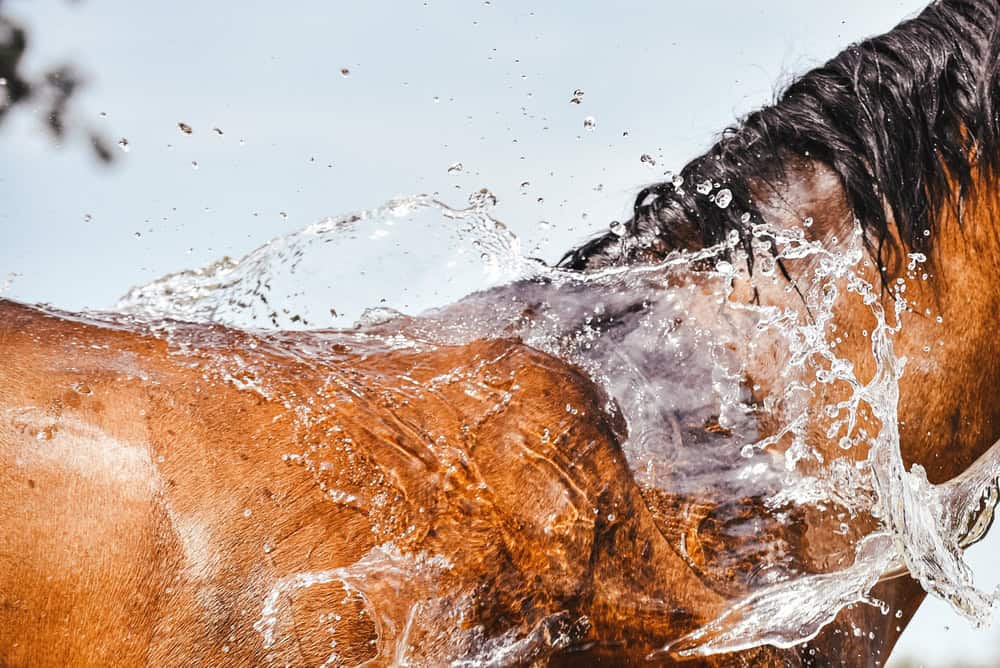
After intense work, spray your horse continuously with cool tap water — and don’t immediately scrape it off. As the water evaporates, it rapidly pulls heat from the horse’s core. Continuous application is one of the fastest ways to bring down body temperature.
9. Encourage Drinking
Offer fresh, cool water often. Despite the common myth, hot horses can and should drink. Staying hydrated supports recovery and helps regulate body temperature.
10. Replenish Electrolytes
Heavy sweating depletes vital salts. Offer electrolytes in water, feed, or a wet mash within two hours of hard work. This helps prevent cramping and speeds recovery, so your horse bounces back ready for the next session.
Keep Your Horse Cool, Comfortable, and Ready to Compete
Summer training doesn’t have to mean compromised performance. By shortening your warm-up, pre-cooling your horse, training during cooler hours, and prioritizing hydration and recovery, you can keep your high-performance horses safe even during the hottest months. Small adjustments add up to big protection against heat stress.
Want to take your horse’s recovery further? Explore the equine healing devices from Gladiator Equine, designed to support muscle recovery and keep your horse performing at its best all season long.
Frequently Asked Questions
How Long Should a Summer Warmup Last for High-Performance Horses?
Aim for 15–20 minutes total, broken into 10–15 minute blocks with walk breaks and cool water rinses in between. This keeps muscles warm without letting core temperature climb too high.
Can Hot Horses Drink Water Right After Exercise?
Yes. It’s a myth that hot horses shouldn’t drink. Offer fresh, cool water frequently to support hydration and recovery.
Should I Scrape Water Off My Horse After Hosing?
No, not right away. Leaving cool water on the coat allows it to evaporate, which pulls heat from the horse’s core faster than scraping it off immediately.
What’s the Best Time of Day to Train in Summer?
Early morning or late evening are ideal, when temperatures and humidity are lowest. Avoid the intense late afternoon sun.
Why Are Electrolytes Important for Horses in Hot Weather?
Heavy sweating depletes essential salts. Replenishing electrolytes within two hours of heavy work helps prevent cramping and supports faster recovery.