
June 1, 2026
How to Care for a Horse’s Mane, Tail, and Hooves: A Complete Guide
A consistent grooming routine does much more than keep a horse looking show-ready. Regular maintenance of a horse’s hair and hooves serves as the first line of defense against painful infections, structural damage, and discomfort. Without daily attention, minor issues can quickly escalate into serious health problems that compromise a horse’s performance and quality of life.
Gladiator Equine understands that healthy horses perform at their peak. Our guide outlines the essential techniques every owner needs to implement for effective horse mane care, horse tail care, and horse hoof care. By following these proven methods, equestrians can maintain their animals’ well-being from head to hoof.
How do you care for a horse’s mane, tail, and hooves?
Horse owners can support mane, tail, and hoof health through regular grooming, daily hoof cleaning, routine farrier visits, proper nutrition, and consistent environmental management. Preventive care helps identify potential issues before they become more serious.
What Are the Best Practices for Horse Mane Care and Horse Tail Care?
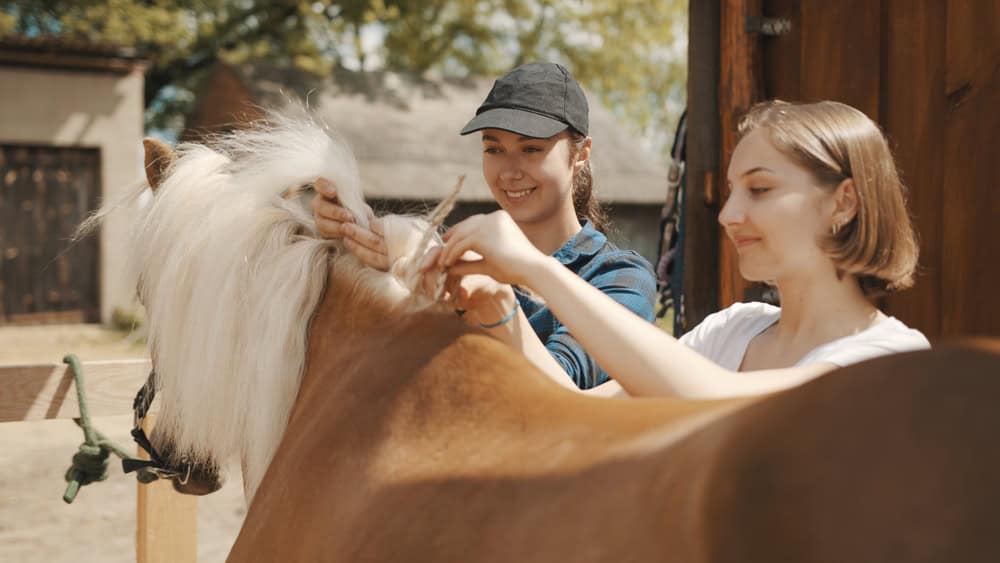
Taking care of your horse’s mane and tail prevents hair loss, breakage, and uncomfortable skin conditions. The hair serves a functional purpose, protecting the horse from flies and harsh weather, which means preserving its length and thickness is essential.
How Can Owners Prevent Hair Loss and Breakage?
To keep the mane and tail thick and healthy, owners should adopt a gentle grooming technique. Follow these three steps to avoid pulling out healthy hair:
- Apply “Slip” First: Owners should never brush dry hair. Always apply a trusted leave-in product or detangler, such as Cowboy Magic or ShowSheen, directly to the hair. Allow the detangler to sit for a few minutes to soften knots before attempting to brush.
- Brush from the Bottom Up: Do not start brushing at the roots and pull down through the whole length. Instead, owners should separate the hair into small sections, start at the ends, and slowly work up toward the roots. Use your fingers or a wide-toothed comb to gently untangle stubborn knots.
- Wash with Care: When washing the horse, apply shampoo directly to the roots of the mane and the tail dock. Clean these areas thoroughly and allow the soapy suds to run down the length of the hair. Rinse the hair completely, apply a moisturizing conditioner, and gently detangle the strands while they are still damp.
How Does Protective Styling Benefit a Horse’s Tail?
Protective styling prevents the tail from getting caught on fence posts, stepped on, or snagged on brush. Many equestrians choose to blunt-cut the bottom of the tail just above the fetlocks to keep it off the ground.
Alternatively, owners can braid the tail hair and secure it inside a tail bag. If using a tail bag, owners must remove it, recondition the hair, and replace the bag every seven to 10 days to maintain optimal moisture levels.
What Are the Essential Steps for Daily and Professional Horse Hoof Care?
Healthy hooves are the foundation of a horse’s soundness. Establishing a strong daily and professional regimen is vital for identifying problems early and keeping the horse comfortable.
How Should Owners Perform Daily Hoof Maintenance?
- Daily Picking: Owners must clean the horse’s hooves every day using a sturdy hoof pick. Scrape firmly from the heel toward the toe. Carefully clear out the “V-shaped” frog and the grooves, known as sulci, located on either side of the frog.
- What to Look For: While picking, inspect the hoof for lodged rocks, nails, or punctures. Owners must also check for signs of thrush, which is a bacterial infection characterized by a foul odor and black, crumbly discharge in the frog area.
When Should Owners Schedule Professional Hoof Care?
- Regular Farrier Visits: Equestrians should schedule regular trimming and shoeing appointments with a qualified farrier every four to six weeks. The exact timing depends on the individual horse’s hoof growth rate and daily workload.
- Environmental Management: A clean environment is critical for hoof health. Ensure the horse’s stall and turnout areas remain clean and dry. Excessively wet, muddy conditions soften the hoof horn and predispose the horse to bacterial infections like thrush.
What Role Do Nutrition and Supplements Play in Hair and Hoof Health?
External care only goes so far without internal support. A balanced diet rich in essential amino acids, vitamins, and minerals fuels healthy hair growth and strong hoof walls. Biotin, zinc, and methionine are widely recognized as beneficial supplements for horses struggling with brittle hooves or sparse manes.
Always consult with an equine nutritionist or veterinarian before adjusting a horse’s feed program to ensure the animal receives the correct balance of nutrients.
How Can Gladiator Equine’s Far-Infrared Equine Devices Enhance Well-Being?
In addition to standard grooming and nutritional support, advanced therapies can significantly improve a horse’s overall health and recovery. Gladiator Equine’s far-infrared equine devices utilize advanced technology to promote circulation, reduce inflammation, and accelerate healing in hard-working horses. Increased blood flow supports faster hoof growth and helps maintain supple, healthy tissue throughout the horse’s body.
Gladiator Equine’s far-infrared equine devices are non-invasive and easy to incorporate into any daily routine. Discover how our technology can support your horse’s performance and recovery today by visiting the Gladiator Equine shop.
Frequently Asked Questions About Equine Care
How often should I trim my horse’s hooves?
Owners should schedule a farrier visit every four to six weeks. The exact timeline depends on the horse’s individual growth rate, environment, and workload.
What is the best way to untangle a horse’s tail?
Never brush a dry tail. Apply a detangler, wait a few minutes, and use your fingers or a wide-toothed comb to work out knots starting from the bottom of the hair and moving upward.
How can I prevent thrush in my horse’s hooves?
Thrush prevention requires daily hoof picking and maintaining a clean, dry environment. Avoid leaving your horse in excessively muddy or wet turnout areas for prolonged periods.
Can I leave a tail bag on my horse all winter?
No. You must remove the tail bag, brush the hair, apply conditioner, and re-braid the tail every seven to 10 days to prevent severe matting and hair damage.