January 22, 2026
The Pros and Cons of Different Types of Horse Feed
Feeding a horse seems simple in theory: they eat grass, right? But any seasoned equestrian knows that equine nutrition is far more complex than turning a horse out to pasture. With the overwhelming variety of bags, bales, and buckets available at the feed store, choosing the right diet can feel like navigating a minefield.
At Gladiator Equine, we understand that nutrition is the cornerstone of your horse’s health and performance. Whether you are caring for a high-performance athlete, a growing foal, or a retired senior, what you put in their feed bucket matters. The market is flooded with options ranging from traditional forage to scientifically formulated concentrates.
Gladiator Equine explores the pros and cons of different types of horse feed, helping you make informed decisions that keep your equine partner happy, healthy, and performing at their best.
Why the Right Horse Feed Matters
Not all horses are created equal, and neither are their nutritional needs. A Grand Prix jumper has vastly different caloric requirements than a pasture puff living the retired life. When selecting a feed, you must consider several factors:
- Age: Growing horses need higher protein and minerals for bone development, while seniors often need easily digestible fiber.
- Activity Level: Working horses burn significant calories and require energy-dense sources.
- Dental Health: Horses with poor teeth struggle with coarse hay and may need softer, soaked alternatives.
- Metabolic Needs: Some horses are “easy keepers” prone to weight gain, while “hard keepers” struggle to maintain condition.
Broadly speaking, horse feeds fall into a few main categories: forages, concentrates, ration balancers, and complete feeds. Let’s break down the advantages and drawbacks of each.
1. Forages: The Foundation of Every Diet
Forage — which includes hay and pasture — should always form the base of your horse’s diet. The equine digestive system is designed to process fiber continuously. Adequate forage keeps the gut moving, buffers stomach acid to prevent ulcers, and minimizes boredom.
Pros of Forage
- Promotes Digestion: The long-stem fiber stimulates the gut and maintains a healthy microbial population.
- Mental Health: Grazing or chewing hay mimics natural behavior, reducing stable vices like cribbing or weaving.
- Safe Energy: For most horses, high-quality forage provides sufficient energy without the “hot” behavior sometimes associated with grain.
Cons of Forage
- Inconsistent Quality: Nutrient content varies wildly depending on when and where the hay was harvested.
- Health Risks: Poorly cured hay can contain dust (leading to respiratory issues) or mold.
- Too Rich for Some: Certain hays, like nutrient-dense alfalfa, can provide too many calories for sedentary horses.
Types of Hay
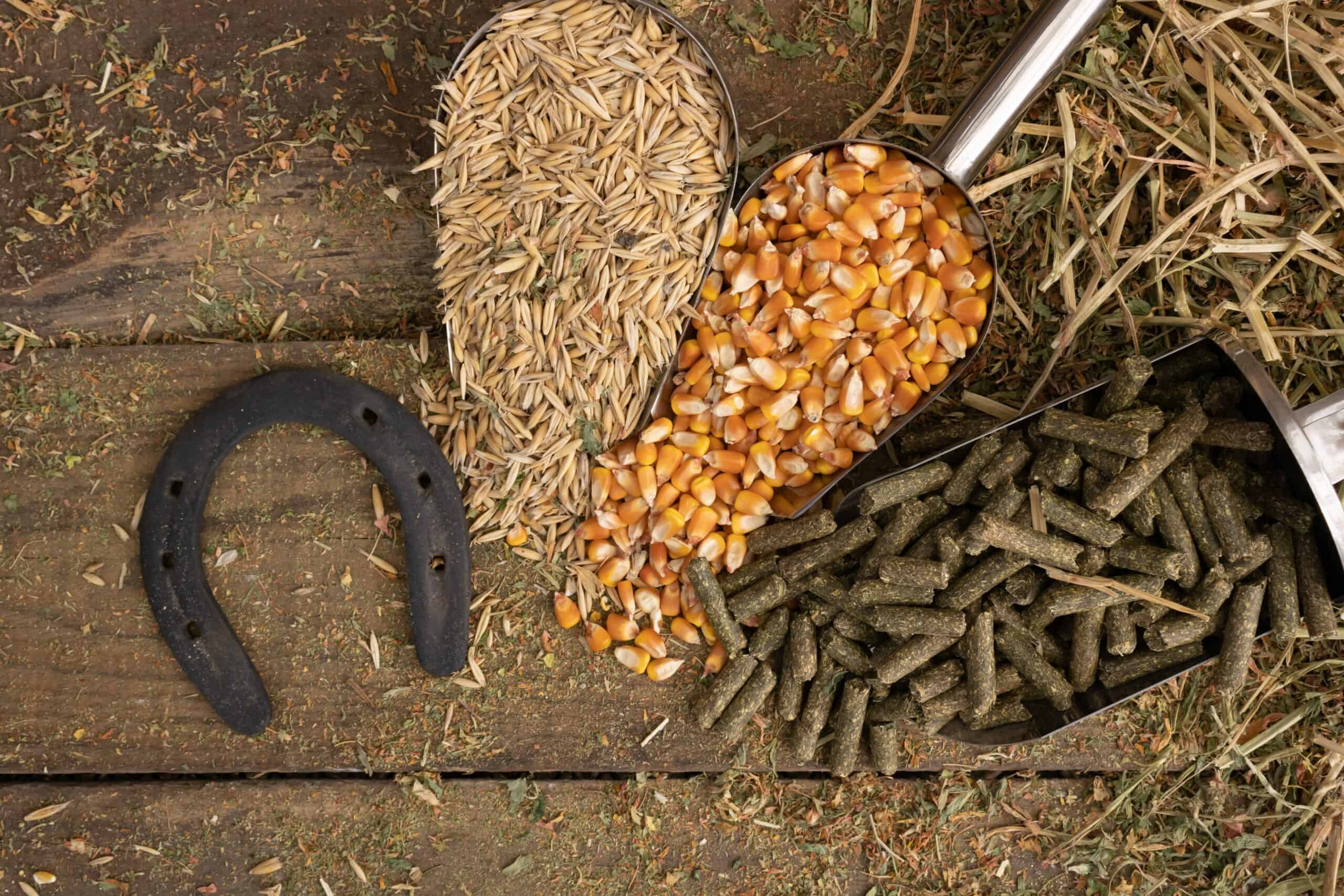
- Grass Hay (Timothy, Orchard, Bermuda): These are generally lower in protein and calories compared to legumes. They are excellent for maintenance diets and easy keepers who need to chew without packing on pounds.
- Legume Hay (Alfalfa, Clover): These are higher in protein, calcium, and energy. While fantastic for lactating mares, growing foals, or hard-working athletes, alfalfa can be risky for horses with kidney issues or those prone to obesity.
2. Concentrates: Grains, Pellets, and Textured Feeds
When forage alone isn’t enough to meet a horse’s energy demands, owners turn to concentrates. These are more calorie-dense and are usually fed in smaller quantities than hay.
Pros of Concentrates
- Performance Boost: They provide the necessary carbohydrates and fats for high-intensity work.
- Convenience: Pelleted feeds prevent horses from sorting out ingredients, ensuring they get a uniform nutritional profile in every bite.
- Palatability: Textured feeds, often called “sweet feed” due to added molasses, are highly attractive to picky eaters and great for hiding medications.
Cons of Concentrates
- Digestive Upset: Overfeeding grain is a leading cause of colic and laminitis. The horse’s stomach is small, and large grain meals can overwhelm the digestive tract.
- Sugar and Starch: Many traditional concentrates are high in non-structural carbohydrates (NSC). This can be dangerous for horses with metabolic conditions like Cushing’s disease or Equine Metabolic Syndrome.
- Sorting: In textured feeds, clever horses may pick out the tasty corn and oats while leaving behind the vitamin-rich pellets.
Common Forms
- Pellets: Ingredients are ground, mixed, and pressed into uniform shapes. This eliminates sorting and makes digestion easier.
- Textured (Sweet Feed): A mix of grains (oats, corn, barley) and pellets, usually coated in molasses. While tasty, keep an eye on the sugar content.
- Extruded: The feed is cooked under pressure, creating a nugget that is light and airy. These are easier to chew and digest, making them a top choice for senior horses or those with dental issues.
3. Ration Balancers: The Vitamin Pill
Ration balancers are pelleted feeds designed to provide essential protein, vitamins, and minerals without the extra calories of a full grain ration.
Pros of Ration Balancers
- Low Calorie: They are perfect for easy keepers who get fat on air but still need their nutritional gaps filled.
- Nutrient Dense: You only need to feed a small amount (often 1-2 pounds daily) to meet nutritional requirements.
- Complements Forage: They are formulated to balance out diets consisting mostly of grass or hay.
Cons of Ration Balancers
- Low Energy: They do not provide significant calories. If your horse is losing weight or working hard, a ration balancer alone won’t be enough to maintain body condition.
- Palatability: Because they are mineral-heavy, some picky eaters may find them less tasty than sweet feeds.
4. Complete Feeds: The All-in-One Solution
Complete feeds are high-fiber products formulated to replace all forage in a horse’s diet if necessary. They contain the fiber of hay and the nutrients of a concentrate.
Pros of Complete Feeds
- Senior Friendly: For horses with few or no teeth who can no longer chew hay, complete feeds (especially when soaked into a mash) are a lifesaver.
- Uniform Nutrition: You know exactly what your horse is getting in every meal, eliminating the variability of hay batches.
- Dust-Free: A great option for horses with severe heaves or respiratory allergies.
Cons of Complete Feeds
- Boredom: Horses finish pellets much faster than hay. Without long-stem fiber to chew on, horses may develop vices out of boredom.
- Choke Risk: Because horses may bolt their feed, there is a slightly higher risk of choke if the feed isn’t soaked or fed carefully.
Choosing the Best Feed for Your Horse
Selecting the right types of horse feed is a balancing act. Always start with the highest quality forage you can afford. Evaluate your horse’s body condition score and energy level, then add concentrates or balancers as needed to fill the gaps.
If you are unsure, consult with an equine nutritionist or your veterinarian. They can help you design a diet plan tailored to your horse’s specific needs.
Support Your Horse’s Healing with Gladiator Equine
Even with the perfect diet, horses can still face injuries and health challenges. At Gladiator Equine, we are dedicated to supporting your horse’s recovery and overall well-being. Our line of healing products is designed to work alongside good nutrition to keep your equine partner feeling their best.
Ready to enhance your horse’s health? Contact Gladiator Equine today to learn more about our innovative healing solutions.