
January 30, 2026
How to Groom Your Horse Like a Pro
Imagine running your hand along your horse’s coat and feeling nothing but silk. No dust clouds, no tangles — just a healthy, gleaming shine. Achieving that show-ring glow isn’t just about having expensive sprays or the perfect genetics; it’s about mastering the art of the grooming routine.
Regular horse grooming is the foundation of good equine health. It stimulates blood circulation, releases natural oils, and gives you a chance to inspect every inch of your horse for cuts, swelling, or skin conditions. Plus, it’s one of the best ways to bond with your partner before a ride.
At Gladiator Equine, we understand that a healthy horse is a happy horse. Whether you are preparing for a competition or just spending a quiet afternoon at the barn, following a professional grooming sequence makes all the difference. Here is your step-by-step guide to equine grooming that will have your horse looking their absolute best.
Preparation: Safety and Tools
Before you start brushing, you need to set yourself up for success. Safety is paramount when working around large animals, so begin by securing your horse. Place a well-fitted halter on your horse and secure them in cross-ties or tie them to a sturdy post using a quick-release knot. This ensures they stay in place while you work around their body.
Next, gather your grooming kit. Having everything within arm’s reach prevents you from leaving your horse unattended. A standard grooming kit should include:
- Hoof pick
- Rubber curry comb
- Stiff brush (dandy brush)
- Soft body brush
- Face brush
- Mane and tail comb
- Clean sponges or towels
- Detangler spray (optional but recommended)
Once you are set up, take a moment to run your hands over your horse’s legs and body. This pre-groom check allows you to feel for heat or swelling that might indicate an injury before you cover it with dust or overlook it during the brushing process.
Step 1: Hoof Cleaning
Many professionals recommend starting with the hooves. “No hoof, no horse” is a cliché for a reason. By picking the feet first, you ensure there are no rocks or nails lodged in the hoof that could cause lameness if the horse steps on them while shifting weight during grooming.
Stand next to your horse’s shoulder (for front legs) or hip (for hind legs), facing the tail. Run your hand down the leg and ask the horse to lift their foot. Once the hoof is up, use your hoof pick to remove dirt, manure, and stones.
Work from the heel toward the toe to avoid accidentally poking the sensitive frog (the V-shaped structure in the center of the hoof). Be thorough in the collateral grooves (the deep crevices on either side of the frog) as this is where thrush — a bacterial infection — likes to hide. Once the hoof is clean, check the condition of the shoe if your horse is shod, ensuring it isn’t loose.
Step 2: The Curry Comb Massage
The curry comb is the powerhouse of horse grooming. This round, rubber or plastic tool is designed to lift deep-seated dirt, loose hair, and dried sweat from the skin to the surface of the coat.
Start at the top of the neck behind the ears. Using firm, circular motions, work your way down the neck, shoulder, and barrel, moving toward the hindquarters. The circular motion is key; it massages the skin and stimulates the production of natural oils, which are essential for a shiny coat.
Be careful over bony areas like the withers, hips, and spine. If your horse pins their ears or swishes their tail, you may be pressing too hard. For sensitive areas like the lower legs, you can use a grooming glove or a softer rubber mitt designed specifically for those spots.
Step 3: Brushing Away the Debris
Once the curry comb has brought all the dust and dander to the surface, it’s time to flick it away.
The Stiff Brush (Dandy Brush)
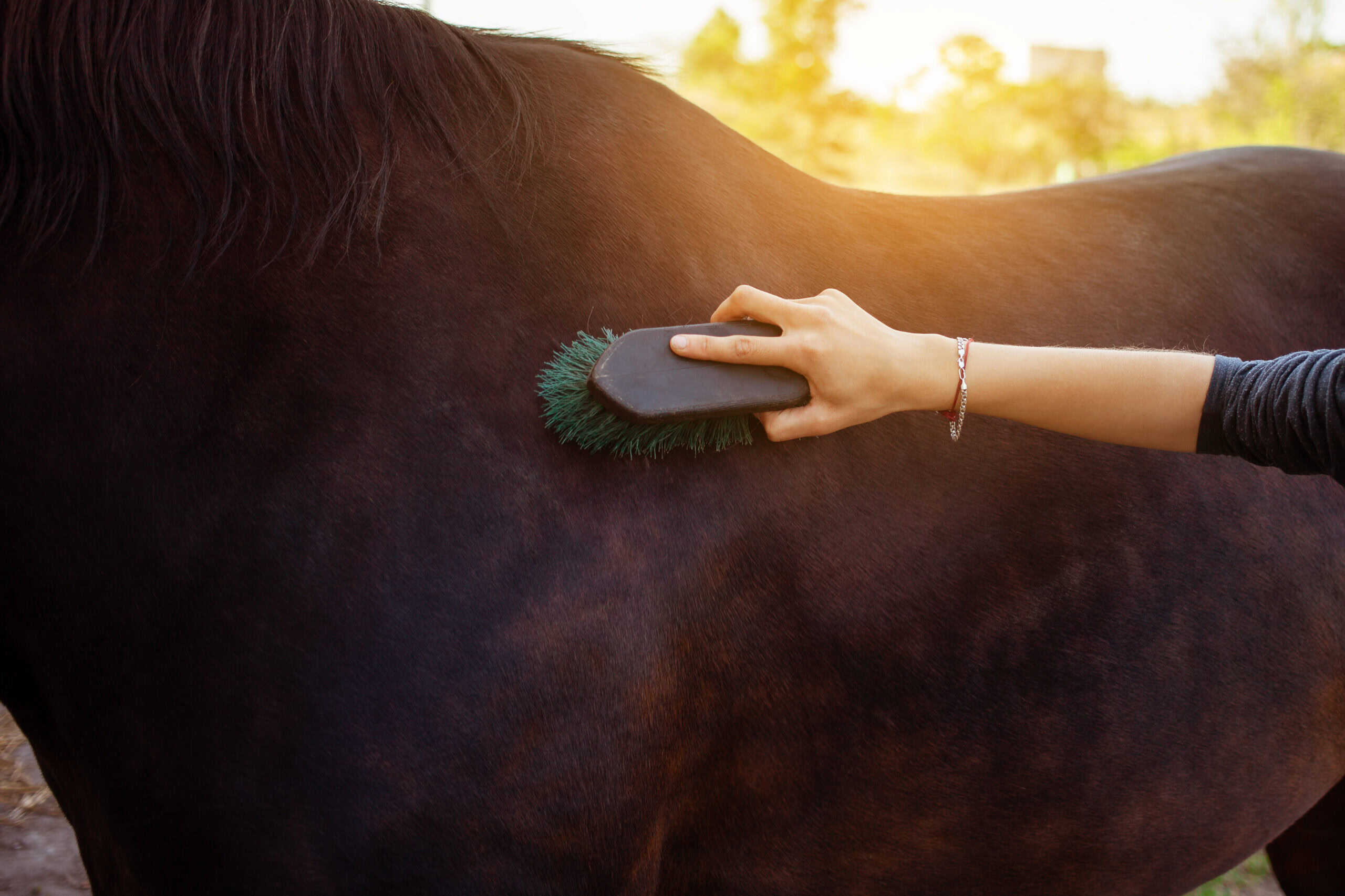
Take your stiff-bristled brush (often called a dandy brush) and start at the neck again. Unlike the curry comb, you want to use short, flicking motions in the direction of the hair growth. The goal is to flick the dirt off the horse, not just push it around.
Be vigorous on the fleshy parts of the horse but gentle on the legs. Because the bristles are stiff, avoid using this brush on the face, ears, or sensitive clipped areas.
The Soft Brush (Body Brush)
After the heavy lifting is done by the stiff brush, the soft brush acts as the polisher. The bristles on this brush are much finer and are packed closer together to catch fine dust.
Use long, sweeping strokes over the entire body, including the legs. This step helps distribute the natural oils you stimulated with the curry comb, smoothing the hair cuticles down to create that finished, glossy look. The more you use the soft brush, the shinier the coat will become.
Step 4: Gentle Face Cleaning
The face requires a delicate touch. Use a specifically designed face brush with very soft bristles, or a soft grooming mitt.
Untie your horse or undo the cross-ties momentarily if you need better access (ensure you are in an enclosed area). Gently brush the forehead, cheeks, and chin. Be very careful around the eyes.
Check the ears for dirt or bugs, but never dig deep into the ear canal. If you notice crusty debris inside the ear, it could be aural plaques or bug bites; consult your vet if it looks irritated.
Step 5: Detangling Mane and Tail
A flowing mane and tail are beautiful, but they are also prone to breakage if groomed incorrectly. Never rip a comb through a dry, tangled tail.
For the best results, spray a quality equine detangler or conditioner on the mane and tail and let it sit for a minute. Then, using your fingers or a wide-toothed comb, start at the bottom of the tail and work your way up. If you encounter a knot, tease it apart with your fingers rather than pulling with the comb. This prevents you from pulling out healthy hair that takes months to regrow.
Repeat the process for the mane. If you want the mane to lie flat on one side, regular brushing and braiding can help train the hair.
Step 6: The Final Touches
To truly groom like a pro, you need to pay attention to the details.
Take a damp, clean sponge or towel and wipe the corners of the eyes and the nostrils. Horses often accumulate dust or discharge here, and cleaning it brightens their face immediately. Use a separate sponge to clean the dock (the underside of the tail) and the sheath or udder area if necessary. Hygiene is crucial here to prevent rubbing and irritation.
Finally, take a slightly damp stable rubber (a linen cloth) or a sheepskin mitt and rub over the horse’s coat one last time. This picks up the last microscopic bits of dust and leaves the coat looking polished.
The Reward of Routine
Consistent horse grooming is about more than aesthetics. It is a daily check-in on your horse’s well-being. By following this professional sequence — hooves, curry, stiff brush, soft brush, and finishing touches — you ensure your horse’s skin breathes, their coat shines, and their muscles get a gentle massage.
Invest the time in your grooming routine, and you will see the reward in a happier, healthier horse that is ready to perform.
Support Your Horse’s Health with Gladiator Equine
External grooming makes your horse look good, but true health comes from the inside out and advanced support. Even the best equine grooming routine can’t fix underlying inflammation or cellular damage.
If you are looking to support your horse’s recovery and overall wellness, explore Gladiator Equine’s healing products. Our technology is designed to improve circulation and reduce inflammation, helping your horse feel as good as they look.