
February 5, 2026
How to Bathe Your Horse Without the Stress
Bathing a horse shouldn’t be a battle. It should be a bonding moment, or at least a necessary chore that doesn’t leave you soaked and your animal trembling. Yet, for many owners, the wash rack is a zone of anxiety. A stressed-out horse can be dangerous to handle and difficult to clean effectively, turning what should be a simple grooming task into a rodeo.
Gladiator Equine breaks down a gentle, patience-first approach to hygiene. By focusing on desensitization and comfort, you can turn a scary hose monster into a manageable part of your routine.
Preparation and Desensitization
Before you even turn on the tap, setting the stage is crucial. If you rush straight into bathing a horse, you might trigger a flight response before you’ve even begun. The goal is to make the environment as predictable and comfortable as possible.
1. Desensitize First
Don’t just start spraying. Let the horse get used to the sight and sound of the hose before water ever touches their skin. Start about four feet away and let them observe. If they lower their head or sniff the hose without reacting, that is a win.
2. Mind the Temperature
Just like us, horses hate a cold shock. Use lukewarm water to prevent discomfort. If you only have cold water available, introduce it very slowly to avoid startling them.
3. Check Your Footing
Ensure the ground in the wash area is not overly slippery. A horse that feels unstable on its hooves is a horse that will panic.
The Bathing Process
Once your horse is calm and the prep is done, you can start the actual wash. The key here is low pressure and gradual movements.
4. Start Low and Slow
Never aim for the face or back immediately. Begin by wetting the hooves and legs. This allows the horse to adjust to the temperature and sensation of the water without feeling overwhelmed. Gradually work your way up to the shoulders as they accept the feeling.
5. Sponge, Don’t Spray the Face
The head is a highly sensitive area. Avoid spraying water directly onto the face, as this is a common trigger for head-shying. Instead, use a damp sponge or washcloth to gently wipe around the eyes and muzzle.
6. Shampoo Strategy
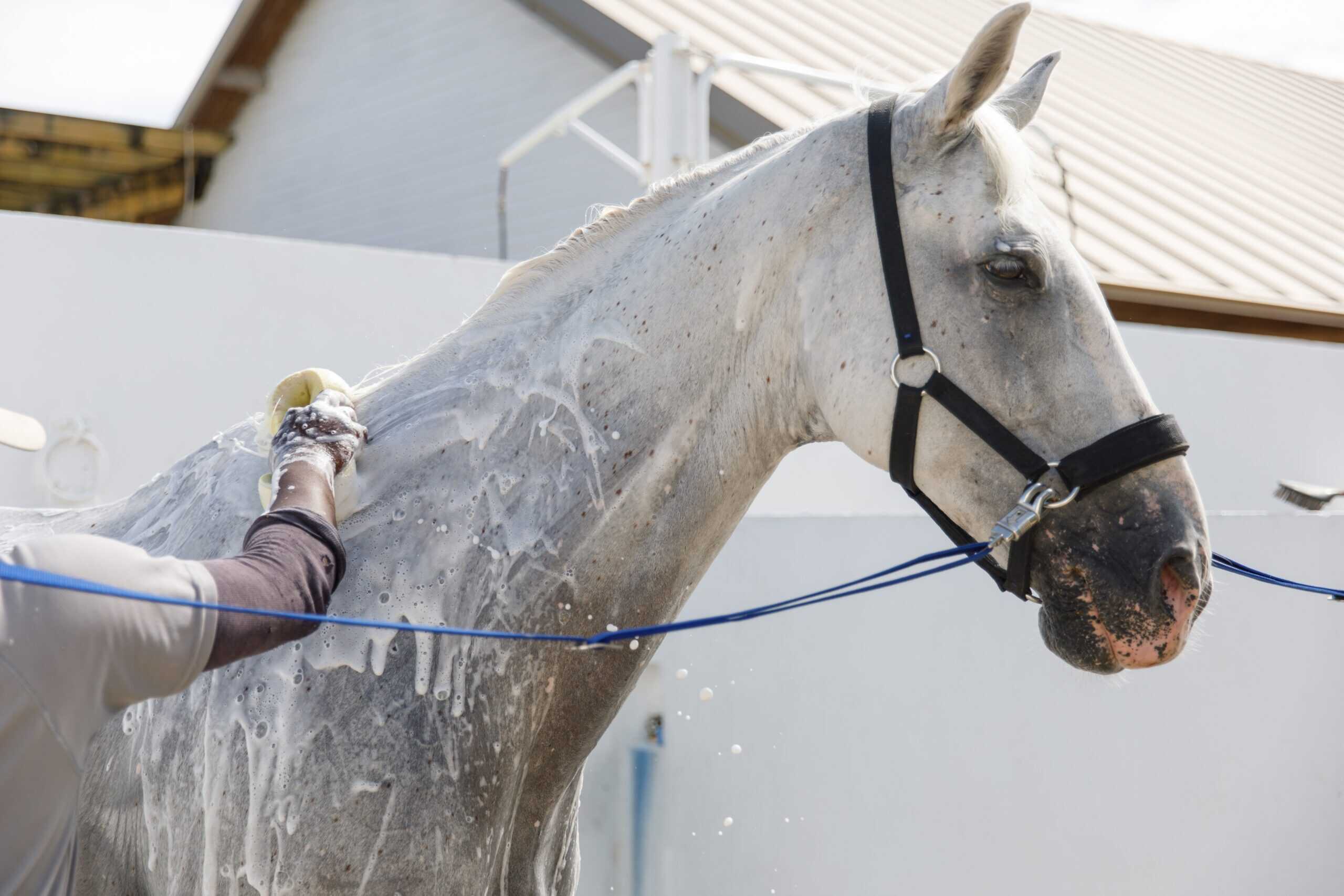
Instead of applying cold shampoo directly to the coat, mix it in a bucket of warm water first. Use a sponge to apply the suds. This is often more comfortable for the horse and distributes the soap more evenly than pouring it on.
Managing Behavior and Comfort
If your horse starts to fidget, don’t force them to stand statuesque. Allowing minor movement can actually reduce the feeling of being trapped. If they feel they can move their feet a little, they are less likely to pull back or rear.
7. Reward Relaxation
Watch for signs of relaxation, such as a deep breath, a lowered head, or a cocked hind leg. When you see these signs, offer immediate praise, a scratch on the withers, or a treat. Positive reinforcement builds long-term confidence.
8. Handle Sensitive Areas with Care
Be extra gentle around the belly and flank. These ticklish spots can cause a horse to kick out if it is surprised by a stream of water.
Rinsing and Drying Tips
Soap residue is a major cause of skin irritation, so rinsing is non-negotiable. Ensure all suds are gone to prevent itching, which will make the next bath even harder.
9. Use a Sweat Scraper
Once the soap is gone, use a sweat scraper to remove excess water from the coat. This speeds up the drying process significantly and prevents the horse from getting chilled.
10. Dry Before Stalling
Don’t put a wet horse back in a stall, especially if it’s drafty or cold. Use a cooler or a moisture-wicking sheet to keep them warm while they dry. And be careful—a wet horse released into a paddock will almost certainly roll in the dirt immediately to dry themselves off!
Check Equine’s Far Infrared Products to Keep Your Horse Calm and Healthy
Transforming a stressed-out horse into a water-loving companion takes time, but the payoff is worth it. By respecting their boundaries and keeping the experience positive, you ensure that bath time is safe and effective for both of you.
If you’re looking for more ways to support your horse’s recovery and comfort after a grooming session, check out Gladiator Equine’s far infrared equine products. Our technology helps improve circulation and reduce tension, perfect for keeping your equine athlete feeling their best.