
September 28, 2026
Showing Friday Through Sunday? Help Your Horse Recover
Quick answer: To help your horse recover between competition days, focus on four things: cooling the body with a walk and cold water, restoring hydration with clean water and electrolytes, treating the legs with ice and poultice, and encouraging light movement on off days. A structured routine reduces the risk of injury and keeps your horse sound across a busy weekend.
A weekend of competition asks a lot from your horse’s body. Muscles fatigue, legs take a pounding, and heavy sweating drains fluids and salts. When your horse shows Friday, Saturday, and Sunday, the hours in between matter just as much as the time in the ring.
Good recovery isn’t about doing one big thing. It’s about a series of small, consistent steps that help your horse’s body reset. Below, Gladiator Equine walks you through a simple, proven routine to support horse recovery between competition days, so your horse stays comfortable, healthy, and ready to perform.
How Do You Cool Down a Horse After Competition?
The first hour after a class sets the tone for recovery. Start by walking your horse for 15 to 30 minutes, or until their breathing and heart rate return to normal. This gentle movement helps clear lactic acid and prevents muscles from tightening up.
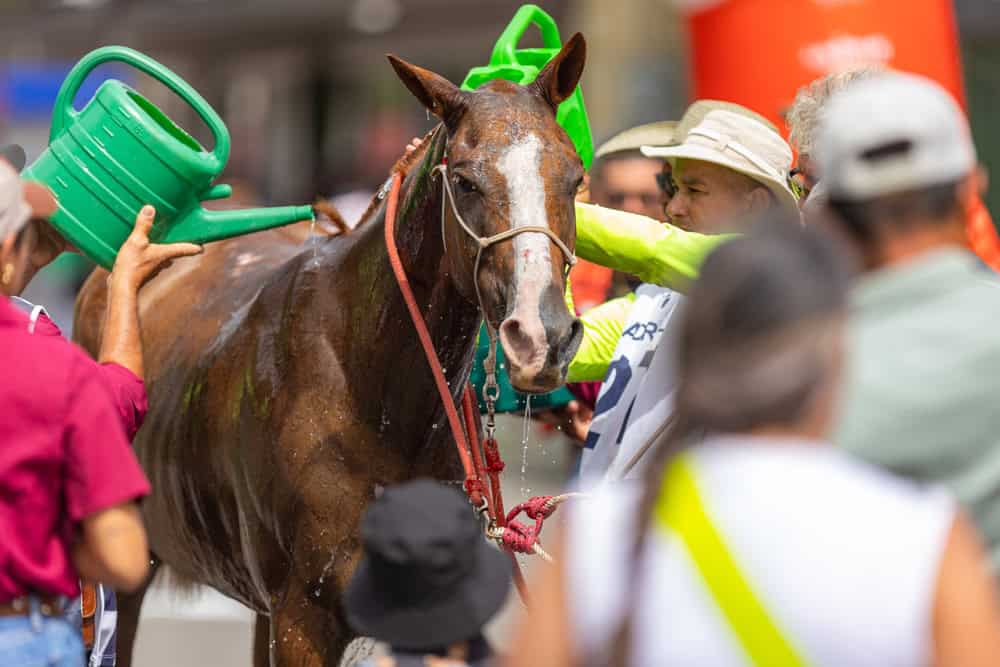
Next, cool the body down. Hose or sponge your horse with cool water, then scrape the water off repeatedly. Scraping matters more than people think, because standing water traps heat against the skin. Repeat the rinse-and-scrape cycle until the water runs cool.
While you’re cooling your horse, run your hands over their body. Inspect the legs, back, and hooves for any cuts, heat, swelling, or sore spots. Catching a small problem early on Friday can save your entire weekend.
What Should a Horse Eat and Drink Between Competition Days?
Hydration is one of the fastest ways to support horse recovery on competition days. Offer clean, fresh water right away and let your horse drink as much as they want. A tired horse will often rehydrate on their own if you give them the chance.
Heavy sweat carries away important salts, so replacing them is key. Mix electrolytes into your horse’s feed or water to restore what was lost. This helps prevent fatigue, cramping, and slow recovery going into the next day.
Keep forage in front of your horse at all times. Constant access to hay protects the stomach lining and helps prevent digestive issues like ulcers, which can flare up under the stress of travel and showing.
How Do You Care for a Horse’s Legs Overnight?
Legs absorb enormous force over a competition weekend, so targeted leg care pays off. Apply cold water or ice boots to the lower legs for 20 to 30 minutes to reduce swelling and calm inflammation.
Once the legs are dry, apply a clay poultice or supportive wraps to draw out any remaining heat. Finish by cleaning the hooves and adding packing if your horse shows signs of bruising or soreness.
For horses on a demanding schedule, therapeutic tools can speed things along. Gladiator Equine PTR™ Fetlock Wraps use patented SemiCera® technology to boost blood flow, reduce inflammation around the fetlock joint, and support the body’s natural cellular repair, all powered by your horse’s own body heat. The Gladiator Equine PTR™ Blanket applies the same far infrared therapy across the whole body, helping improve circulation and calm your horse without medication.
Should You Exercise a Horse on Its Off Day?
Yes, gentle movement beats total rest. A horse that stands in a stall all day tends to stiffen up, which makes the next day harder.
Hand-walk your horse for short, easy walks later in the day to keep muscles loose. When possible, allow free movement in a small paddock or on a horse walker rather than confining your horse to a stall. The goal is balance: enough rest to recover, enough movement to stay supple.
Keep Your Horse Ready All Weekend Long
Recovery between competition days comes down to a repeatable routine. Cool the body, restore fluids, care for the legs, and keep your horse moving gently. Do this after every class, and your horse will feel fresher on Sunday than the weekend would otherwise allow.
Want to give your horse an added recovery advantage? Explore Gladiator Equine’s far infrared therapy products, including PTR™ Fetlock Wraps and PTR™ Blankets, designed to reduce inflammation and accelerate healing between competitions. Your horse works hard for you, so give their body the support it deserves.
Frequently Asked Questions
How Long Does a Horse Need to Recover Between Competition Days?
Most horses benefit from a full recovery routine within the first hour after competing, followed by ongoing care overnight. With proper cooling, hydration, leg care, and light movement, a fit horse can be ready to compete again the next day.
Should I Give My Horse Electrolytes During a Competition Weekend?
Yes. Heavy sweat drains salts that plain water alone cannot replace. Adding electrolytes to feed or water helps restore those salts, prevents cramping, and supports faster horse recovery between competition days.
Is Stall Rest or Turnout Better on an Off Day?
Light turnout or a horse walker is usually better than stall confinement. Gentle, free movement keeps muscles loose and reduces stiffness, while total confinement can leave a horse tight and sore for the next class.
How Do Far Infrared Therapy Products Help a Horse Recover?
Far infrared therapy products like Gladiator Equine PTR™ Fetlock Wraps and PTR™ Blankets use SemiCera® technology to improve circulation and reduce inflammation. Better blood flow delivers more oxygen and nutrients to tired tissues, which supports the body’s natural healing process.